咨询热线:8801886128652
 中文
中文 English
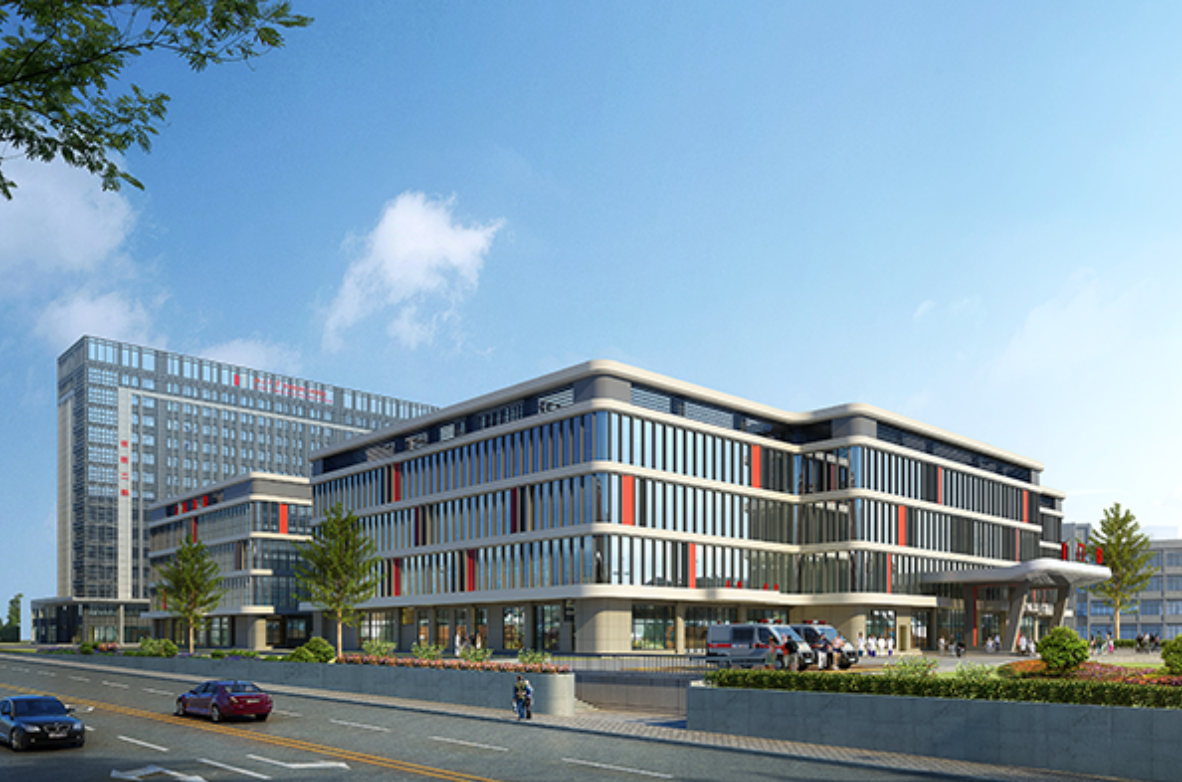
In 1984, to address the issue of lung cancer among Gejiu miners, the Yunnan Provincial People's Government approved the establishment of the Provincial Cancer Hospital as an affiliated hospital of Kunming Medical College. The hospital officially commenced operations in 1992. In 2021, it was approved for the National Regional Medical Center for Oncology project, and in June 2024, Peking University Cancer Hospital Yunnan Branch (National Regional Medical Center for Oncology) was inaugurated at the hospital. The hospital is a tertiary Grade A specialized cancer hospital in Yunnan Province, integrating medical care, teaching, research, and prevention, and undertakes tasks such as cancer prevention and treatment research, talent cultivation, and academic exchanges in oncology. It houses 12 major medical centers, including the Yunnan Cancer Center and the Yunnan Cancer Diagnosis and Treatment Quality Control Center. The hospital is designated as a National Health Commission Early Diagnosis and Treatment Base for Cancer, a Yunnan Provincial Continuing Education Base for Oncology, a Yunnan Provincial International Cooperation Demonstration Base for Lung Cancer, and a National Clinical Trial Institution for Oncology.
The main campus of the hospital covers an area of 79 mu (approximately 5.3 hectares) with a total construction area of 246,000 square meters. It houses 31 clinical departments and 12 medical technology departments, providing 1,498 designated beds. The under-construction Cancer Center project is located north of the main campus, occupying 24 mu (approximately 1.6 hectares) with a planned investment of 1.85 billion yuan. It will feature 693 beds and is expected to become operational by 2026. The Free Trade Zone campus, currently under construction in the Economic Development Zone, spans 119 mu (approximately 7.3 hectares) and will accommodate 600 beds, with Phase I covering 69 mu (approximately 4.6 hectares) and a total construction area of 135,000 square meters. Phase II reserves 50 mu (approximately 3.3 hectares) for future construction of a proton and heavy ion therapy center. The hospital is equipped with internationally advanced diagnostic and therapeutic devices, including da Vinci surgical robots, intraoperative radiotherapy systems, CyberKnife, PET-MR, and PET-CT, placing its oncology treatment technologies at the leading level in Yunnan Province.
The hospital currently employs 2,882 staff members, including 194 doctoral degree holders, 784 master's degree holders, and 415 senior professionals. Its faculty comprises 1 Changjiang Scholar Distinguished Professor, 1 National Science Fund for Distinguished Young Scholars, 2 Leading Talents under the Central Organization Department's Ten Thousand Talents Program, 2 National Hundred-Thousand-Ten Thousand Talent Project awardees, 7 National Key Post holders, and 2 National Outstanding Science and Technology Workers. The institution has secured 89 individual grants and 10 team grants under the Xingdian Talent Support Program. Additionally, 24 individuals have been recognized as Provincial Outstanding Researchers or Provincial Key Post holders, while 33 have been designated as Yunnan Provincial Young Academic and Technical Leaders, Young Academic and Technical Leaders Reserve Talents, or Technological Innovation Talents.
In recent years, the medical services sector has experienced rapid growth, with various operational indicators maintaining a sustained positive trend. In 2024, the total number of outpatient visits exceeded 1 million for the first time, representing an 18.26% year-on-year increase. The number of surgical procedures reached 32,700, up 0.93% year-on-year, accounting for 34.41% of total surgeries (a 3.09% increase) and 50.93% of Level IV surgeries (a 2.04% rise). The CMI value was 1.2996, with 81.57% of patients coming from regions outside Kunming, marking a significant year-on-year growth. The surgical volumes for malignant tumors in the lungs, breast, colorectal, and gastric cancers ranked first in the province.
The hospital has established a specialized system for tumor prevention, screening, and diagnosis and treatment with advanced diagnostic technologies and comprehensive therapeutic approaches. Three specialties—oncology, thoracic surgery, and gastrointestinal surgery—have been approved as national-level key clinical specialties, while 17 specialties including breast surgery, gynecology (gynecologic oncology), and radiotherapy have been designated as provincial-level key clinical specialties. The hospital has also been approved as a pilot project for clinical collaboration in treating major and complex diseases (lung cancer) in Yunnan Province, as well as 12 national-level pilot units for standardized diagnosis and treatment quality control of specific diseases such as lung cancer and liver cancer. The Molecular Diagnostics Center and Medical Laboratory Department have passed the evaluation and assessment by the China National Accreditation Service for Conformity Assessment (CNAS) and possess the qualification as a stem cell clinical research filing institution.
In 2018, the hospital established Yunnan Province's only internet hospital based on a physical hospital—the Yunnan Cancer Hospital Internet Hospital—actively exploring new models of internet-based diagnosis and treatment services to help more patients overcome difficulties in accessing medical care. As a member unit of the National Oncology Specialty Alliance and the chair unit of the Yunnan Oncology Specialty Alliance, which has now reached 171 member units, it has also established telemedicine service collaborations with multiple tertiary hospitals and county-level hospitals. In 2024, it joined the "China Oncology Clinical Research Medical Ethics Review Mutual Recognition Consortium" as one of the 20 founding member units.
The hospital boasts 8 key laboratories, 10 provincial-level innovation teams, 10 research centers, 4 academician workstations, and 10 expert workstations, serving as the postdoctoral research workstation of the Third Affiliated Hospital of Kunming Medical University. Over the past five years, a total of 792 research projects have been approved, with over 900 high-level papers published in SCI-indexed journals and Peking University core journals, along with 14 invention patents. During the same period, the hospital has received 20 research awards, including 7 provincial-level scientific and technological progress awards and 13 department-level awards.
As a directly affiliated hospital of Kunming Medical University, it comprises 12 teaching and research departments, with 41 doctoral supervisors and 237 master's supervisors. Utilizing the "Specialized Hospital and General Hospital Complementary Teaching Alliance" model, it implements "throughout" training for clinical medicine students and is recognized as a national first-class undergraduate clinical medicine program construction site. It also serves as a national standardized residency training base, offering two specialized programs: Radiation Oncology and Clinical Pathology. The institution has established a comprehensive talent cultivation system encompassing undergraduate, master's, doctoral, postgraduate education, continuing medical education, and international student training.
As the construction unit of the National Regional Medical Center project, the hospital actively serves and integrates into national development strategies, vigorously expands external exchanges and service capabilities, with over 80% of admitted patients coming from regions outside Kunming and other countries, including a large number of patients from neighboring provinces and autonomous regions such as Guizhou, Sichuan, Guangxi, and Xizang. In 2025, as one of the first batch of Yunnan Province International Medical Service Pilot Hospitals, the hospital established an International Diagnosis and Treatment Department, attracting a significant number of patients from countries along the "Belt and Road" such as Bangladesh, Vietnam, Myanmar, and Laos.
As a pilot hospital for modern hospital management systems, the institution has continuously advanced the modernization of governance structures and capabilities, achieving significant improvements in comprehensive strength, core competitiveness, and informatization levels. It has obtained multiple certifications including Level II in the National Health Commission's Smart Management Grading Evaluation, Level VI in Electronic Medical Record System Functional Application, Level IV Grade A in Interoperability Standardization Maturity, and Level III in Smart Service Evaluation. The hospital has been honored with numerous accolades such as National Advanced Collective in Cancer Prevention and Treatment, National Model Hospital Trusted by the Public, National Top 100 Model Hospitals Trusted by the Public, National Humanistic Love Hospital, National Provincial Quality Control Center with Outstanding Performance, National Advanced Collective in COVID-19 Prevention and Control within the National Health System, National Women's Civilized Post, and Yunnan Provincial Advanced Collective in Health and Wellness.
In the future, the hospital will adhere to the principle of "putting patients first and serving cancer patients wholeheartedly," uphold the hospital motto of "compassion in heart, diligence in profession, and expertise in surgery," and strive to establish itself as a top-tier oncology medical hub in western China, nationally leading, and radiating influence across South Asia and Southeast Asia.